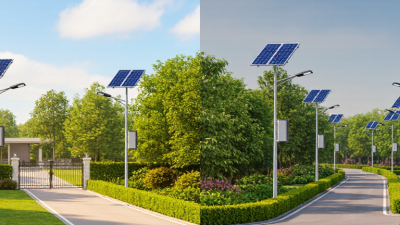
Finding a dependable Solar Street Light Near Me can feel simple until specifications, shipping, and installation risks appear. China has thousands of manufacturers, yet product photos rarely reveal battery quality, controller settings, or nighttime performance. This guide introduces ten prominent Chinese suppliers and explains how buyers can compare them more responsibly.
James P. Dunlop, a photovoltaic systems engineer and author of practical solar-energy guidance, offers a useful principle: “A solar street light is a complete system, not merely a lamp.” That idea matters. A bright LED cannot compensate for poor panel sizing or weak battery protection. Real performance depends on local sunlight, pole height, road width, temperature, and expected operating hours.
The selected suppliers should be examined through verifiable evidence. Look for tested lumen output, battery chemistry, photovoltaic ratings, IP65 or higher protection, and documented warranty terms. Ask whether the supplier provides lighting simulations, installation drawings, and replacement-part support. A factory visit can help, but it does not replace independent testing.
Small details often decide long-term value. Check the controller’s low-voltage protection. Examine cable seals after rain. Request sample data from winter operation, not only bright summer conditions. Ask for references from comparable projects near your region.
There is no permanent “top ten” list. Rankings change.
A supplier may excel in export support but lack nearby service. Another may offer impressive pricing while providing unclear battery warranties. This comparison recognizes that limitation and encourages buyers to verify every claim before placing an order. Reliable selection requires more than proximity; it requires evidence, technical judgment, and a willingness to question attractive promises.
What Are Solar Street Lights and How Do They Work?
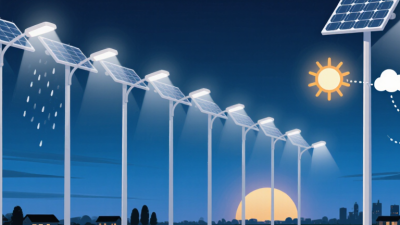
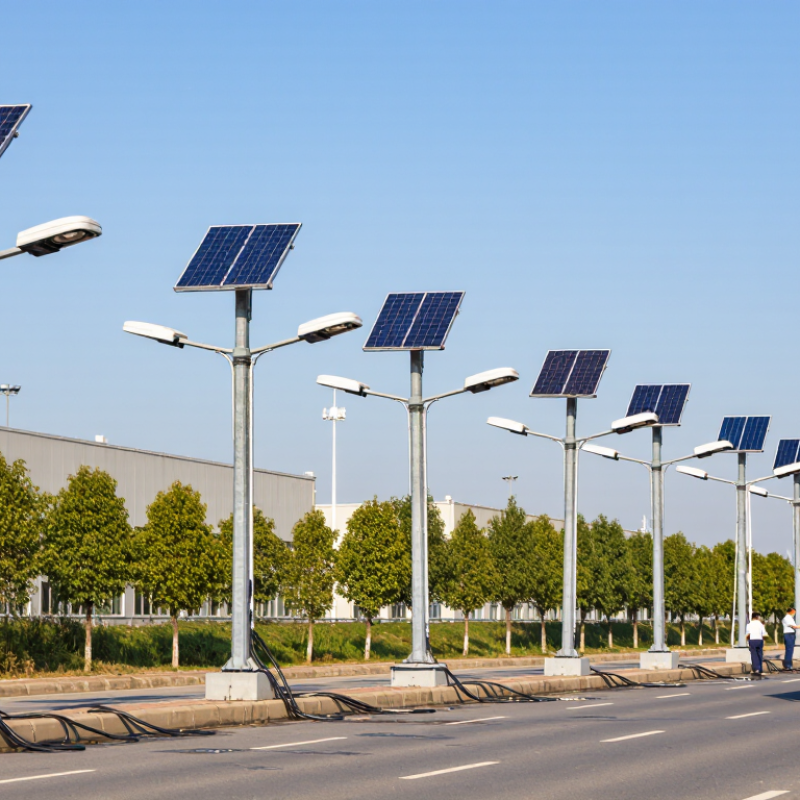
Solar street lights are independent outdoor lighting systems. Each unit uses a photovoltaic panel, rechargeable battery, LED lamp, controller, and mounting pole. During daylight, the panel converts sunlight into electricity. The controller stores that energy in the battery. After sunset, the lamp switches on automatically.
Many systems use dimming or motion sensors. This saves battery power when roads or paths are empty. The U.S. Department of Energy reports that LED lighting can use at least 75% less energy than incandescent lighting. However, street-light savings depend on design, weather, maintenance, and operating schedules. IRENA’s Renewable Capacity Statistics 2024 recorded about 1,419 GW of global solar capacity at the end of 2023. Solar technology is mature, but small lighting systems still need careful engineering. They are not magic.
Tips: Check the panel size, battery chemistry, waterproof rating, and nighttime autonomy. A practical system should explain its performance after several cloudy days. Ask for test records, lighting calculations, and battery-cycle data. Avoid judging suppliers only by a bright sample lamp. Some products look powerful in a showroom but perform poorly in winter. Local latitude, shade, dust, and road width matter. A small field trial can reveal more than a polished brochure.
China has become a practical sourcing base for solar street light projects. IRENA’s Renewable Capacity Statistics 2024 reports that global solar capacity reached about 1,419 GW by the end of 2023. China contributed a major share of new installations that year. This manufacturing depth supports competitive pricing, steady component supply, and faster product development.
Suppliers in China often coordinate panels, lithium batteries, controllers, LED modules, poles, and monitoring systems in one supply chain. That integration can simplify procurement and reduce compatibility risks. The IEA’s Renewables 2023 report also identifies solar PV as the fastest-growing renewable power technology worldwide. Demand encourages suppliers to improve efficiency, thermal management, and battery protection.
A serious evaluation should include shadow analysis, battery capacity calculations, salt-spray testing, and lighting simulations. Request LM-79 or equivalent photometric data, IP ratings, warranty terms, and replacement procedures. Factory audits can reveal testing equipment, assembly discipline, and actual production capacity. Yet scale is not proof of quality. Some quotations hide short battery lifespans or unrealistic autonomy figures. Local climate matters greatly; a design suitable for a dry inland road may fail near a humid coast. The World Bank’s off-grid solar work repeatedly stresses quality assurance and service access, not merely initial affordability. China suppliers can offer strong value, but buyers still need independent verification, clear technical specifications, and careful pilot installation.
Searching for China’s top solar street light suppliers near you starts with a clear project brief. Record road width, pole spacing, local weather, sunlight hours, and required lighting levels. Then search supplier directories, trade platforms, and map listings using terms such as “solar street light supplier” and your city name. Nearby distributors may offer faster service, while Chinese manufacturers may provide better customization and pricing.
Check technical evidence before comparing quotations. Ask for panel wattage, battery chemistry, controller protection, LED efficiency, and photometric files. Request product samples and test them during several cloudy nights. A professional supplier should explain battery capacity, temperature limits, charging behavior, and expected service life in simple language. Review factory photos, production records, quality certificates, export experience, and customer references. Do not trust impressive claims without documents.
Tips: Compare at least three suppliers. Confirm the exact warranty terms. Ask who handles replacement parts locally. Check shipping, installation, and maintenance costs separately. A video factory tour helps, but it is not equal to an independent inspection. I have found that some quotations hide battery degradation or exclude installation hardware. That mistake can change the real project cost. Use a written specification sheet, and ask every supplier to quote against the same requirements. Small details matter.
| No. | Supplier Location or Sourcing Route | Best Fit for Buyers | Common Product Configuration | Technical Documents to Request | Quality and Compliance Checks | Typical Commercial Advantage | Key Verification Question |
|---|---|---|---|---|---|---|---|
| 1 | Zhongshan, Guangdong | Importers and distributors seeking a broad range of outdoor lighting products from an established lighting-manufacturing area. | All-in-one models Split-type models Solar garden lights | LED datasheet, photovoltaic module datasheet, battery specification, lighting simulation file, installation drawing, and packing list. | Confirm IP rating under IEC 60598-1 testing procedures, corrosion protection, battery safety, and consistency between samples and mass production. | Wide product selection and easier comparison between different housing, battery, and control configurations. | Can the supplier provide a sample with the same LED power, battery capacity, solar panel rating, and controller used in the quotation? |
| 2 | Yangzhou, Jiangsu | Municipal, roadway, industrial-park, and large-area projects that require complete pole-and-lighting packages. | Solar street-light poles Roadway luminaires Large project packages | Foundation drawing, pole structural calculation, wind-load information, photometric file, wiring diagram, and installation manual. | Review pole material, galvanizing method, weld quality, foundation requirements, wind-load design, and lighting uniformity. | Suitable for projects requiring coordinated supply of luminaires, poles, brackets, cables, and foundations. | Does the quoted pole design match the local wind-speed requirement and the required installation height? |
| 3 | Shenzhen, Guangdong | Smart-city projects, remote monitoring applications, and buyers who need connected lighting controls. | IoT-enabled lights Remote monitoring Dimming controls | Controller protocol, communication method, platform screenshots, API documentation, energy profile, and cybersecurity information. | Verify network coverage, data ownership, software access rights, offline operation, firmware updates, and system compatibility. | More options for adaptive dimming, fault alerts, energy reporting, and centralized operation. | Will the system continue to operate locally if the mobile network or cloud platform becomes unavailable? |
| 4 | Ningbo, Zhejiang | Export buyers prioritizing organized logistics, metalwork capability, and product customization. | Customized housings Aluminum fixtures Export packaging | Material certificates, surface-treatment specification, carton dimensions, gross weight, barcode details, and spare-parts list. | Check aluminum grade, coating thickness, salt-spray resistance, fastener material, sealing design, and carton drop protection. | Useful for buyers that need custom colors, brackets, labels, packaging, or mechanical dimensions. | What are the tooling, customization, and replacement-part conditions for the selected housing design? |
| 5 | Foshan, Guangdong | Commercial compounds, residential communities, campuses, parks, and decorative outdoor applications. | Decorative street lights Community lighting Landscape-compatible designs | Appearance drawings, color-finish specification, illumination plan, battery compartment drawing, and maintenance instructions. | Assess visual consistency, waterproof cable entries, battery accessibility, anti-theft fasteners, and nighttime glare control. | Offers more design-oriented options where appearance and streetscape integration are important. | Can the battery and controller be accessed without removing the complete lamp head or pole? |
| 6 | Xiamen, Fujian | Coastal, island, resort, and high-humidity projects requiring additional environmental protection. | Coastal applications High-humidity designs Anti-corrosion options | Corrosion-protection specification, salt-spray test report, sealing details, thermal test data, and coastal installation recommendations. | Confirm stainless-steel or treated fasteners, coating performance, drainage design, connector sealing, and battery temperature limits. | Better suited to projects where salt air, humidity, and frequent weather exposure increase maintenance risk. | What corrosion-protection measures are included for the lamp body, pole, screws, connectors, and battery enclosure? |
| 7 | Dongguan, Guangdong | OEM and private-label buyers requiring electronic integration, custom controllers, or product revisions. | OEM projects Custom controllers Electronic integration | Electrical schematic, bill of materials, controller firmware details, EMC test information, and engineering-change procedure. | Review component traceability, incoming inspection, aging tests, overcharge protection, over-discharge protection, and thermal management. | Suitable for buyers that need customized electronics, branding-free packaging, or application-specific control logic. | How are engineering changes documented, approved, and communicated after the first production order? |
| 8 | Changzhou, Jiangsu | Industrial estates, logistics areas, warehouses, and roads requiring practical illumination and robust pole systems. | Industrial lighting High-mast options Heavy-duty poles | Illumination calculation, pole load data, battery autonomy calculation, maintenance schedule, and spare-parts plan. | Check structural safety, foundation compatibility, thermal performance, emergency operating mode, and replacement accessibility. | Appropriate for functional lighting projects where durability, serviceability, and total operating cost matter. | What lighting level and autonomy can be maintained after several consecutive days of low solar irradiance? |
| 9 | Jinhua, Zhejiang | Rural roads, township projects, public spaces, and medium-sized installations seeking flexible order quantities. | Integrated units Rural-road lighting Standardized models | Product specification sheet, battery-cycle information, installation guide, warranty terms, and recommended spare-parts list. | Compare actual battery energy in watt-hours, solar-panel power, LED efficacy, controller settings, and water-ingress protection. | Standardized product families can simplify replacement, installation training, and spare-parts management. | Are the quoted battery capacity and solar-panel rating measured values or only nominal marketing values? |
| 10 | Hangzhou, Zhejiang | Buyers focused on energy management, connected infrastructure, and data-based maintenance planning. | Smart controls Energy monitoring Central management | System architecture, dashboard demonstration, data-export format, user-permission structure, service-level terms, and backup procedure. | Verify data security, platform ownership, subscription costs, controller replacement process, and long-term software support. | Useful for projects that need operational data, remote fault reporting, and measurable energy performance. | Are software, connectivity, data storage, and platform-support fees included for the full warranty period? |
Note: The locations above represent common solar-lighting manufacturing and sourcing areas in China rather than a fixed ranking of individual companies. Product specifications, order quantities, warranties, certifications, prices, and delivery times must be verified directly with each shortlisted supplier for the intended project site.
When comparing China’s top 10 solar street light suppliers near you, begin with performance, not catalog appearance. Ask for measured lighting data, including wattage, lumen output, beam angle, and average lux. A supplier should explain how the fixture performs during cloudy winter nights, not only under ideal sunlight.
Check the battery chemistry, usable capacity, cycle rating, and operating temperature range. Lithium iron phosphate batteries often suit outdoor projects, but the complete system still needs testing.
Review the panel’s rated power, controller protection, IP and IK ratings, and charging behavior. Request certificates from recognized testing bodies, installation manuals, and a clear warranty covering batteries, LEDs, and controllers separately. Vague warranty language is a warning sign.
Local service matters as much as factory pricing. Compare sample costs, minimum order quantities, production lead times, spare-part availability, and delivery terms. Ask whether replacement batteries or controllers can be supplied after several years. Request recent project references in climates similar to yours, then verify the lighting results independently. A low quotation may hide weaker batteries or unrealistic autonomy claims. No comparison is perfect. I would still test one complete unit for several weeks before approving a large order, because cloudy weather, mounting height, and nearby trees can change the real result.
Searching “China top 10 solar street light suppliers near me” is easy; verifying one is harder. Distance should not replace evidence. IRENA’s Renewable Capacity Statistics 2024 reported 1,419 GW of global solar capacity by the end of 2023. This growth also increases the number of inexperienced traders in the market. Request a factory address, business license, production photos, and recent project references. Then verify them independently.
Ask for a complete sample before discussing volume pricing. Check the panel wattage, battery chemistry, usable capacity, LED output, autonomy hours, pole thickness, and controller protection. A low quotation may exclude freight, installation, replacement batteries, or spare controllers. Compare total ownership cost, not only the unit price. Review IEC 60598-1 safety documentation, IP and IK ratings, battery test reports, and LM-80 data where applicable. Documents need matching model numbers. Small mismatch, big concern.
After-sales support deserves equal attention. Lighting Global market guidance emphasizes quality assurance, consumer protection, and reliable service in off-grid solar markets. Confirm warranty length, covered parts, response times, remote diagnosis, and local spare-parts availability. Put these terms in the contract. I once trusted a polished test report too quickly; the sample’s wiring was poorly sealed. That mistake was expensive. A second inspection is not excessive. It is practical risk control.