Leave Your Message

Top 10 Dusk to Dawn Solar Street Lights for Global Buyers

Choosing a reliable Solar Street Light Dusk To Dawn system requires more than comparing wattage and price. Buyers must examine battery chemistry, panel efficiency, lighting output, weather resistance, controls, and local solar conditions. A bright lamp can still fail before sunrise if its battery is undersized.

The International Energy Agency’s Renewables 2024 report identifies solar PV as the leading source of new renewable capacity growth. IRENA’s Renewable Capacity Statistics 2024 recorded approximately 1,419 GW of global solar PV capacity by the end of 2023. These figures support solar lighting’s momentum, but they do not guarantee equal product quality. Street-light performance depends heavily on installation angle, shading, temperature, and maintenance access.

Fatih Birol, Executive Director of the IEA, has described solar PV as “the cheapest source of electricity in history.” His observation explains the technology’s appeal, although standalone lighting still involves batteries, logistics, and replacement costs. That part is often overlooked.

This Top 10 selection focuses on practical evidence rather than impressive packaging. We compare usable illumination, dusk-to-dawn reliability, autonomy during cloudy weather, IP protection, battery safety, warranty terms, and installation flexibility. A 30-watt fixture with intelligent dimming may outperform a larger lamp with poor energy management. Sometimes, the cheaper model wins. Not often enough.

Performance claims also need skepticism. Laboratory brightness figures may not match a wet roadside, dusty panel, or shaded entrance. The best choice is therefore regional, measurable, and slightly cautious. This guide helps global buyers identify dependable Solar Street Light Dusk To Dawn solutions for roads, compounds, pathways, and remote facilities.
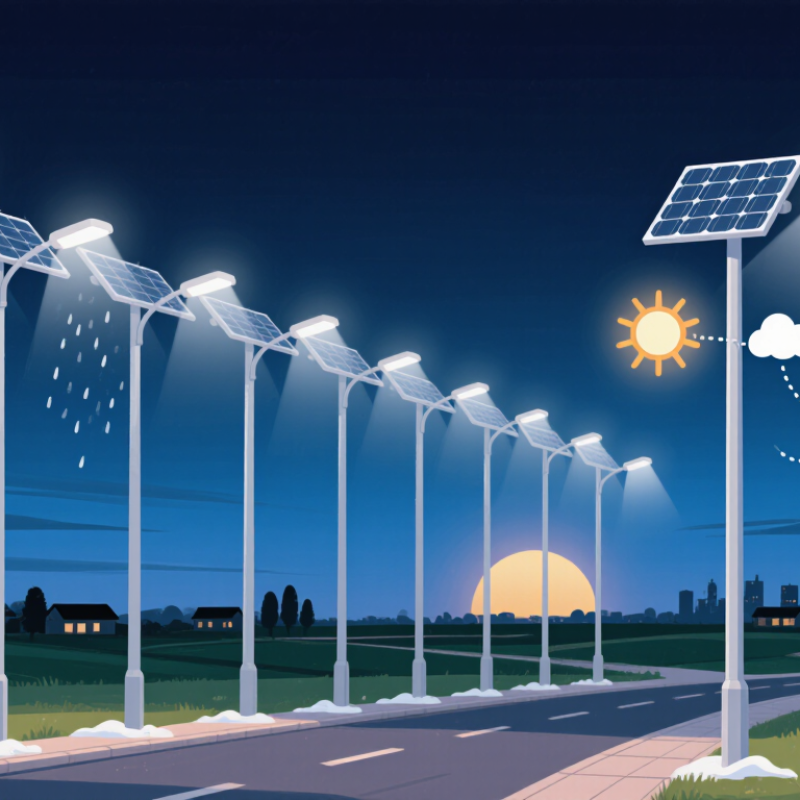
Top 10 Dusk to Dawn Solar Street Lights for Global Buyers

What Are Dusk-to-Dawn Solar Street Lights?

Top 10 Dusk to Dawn Solar Street Lights for Global Buyers

What Are Dusk-to-Dawn Solar Street Lights?

A dusk-to-dawn solar street light operates automatically from sunset until sunrise. It collects sunlight through a photovoltaic panel during daylight hours. After sunset, a controller activates the LED lamp without grid electricity or manual switching.

The system usually includes a solar panel, rechargeable battery, LED module, controller, and mounting pole. The controller manages charging and prevents excessive battery discharge. Some models reduce brightness during quiet hours. Others increase output when movement is detected. This saves stored energy.

The label sounds simple, but performance depends on several details. Battery capacity affects overnight lighting during long winter nights. Panel size matters when skies remain cloudy for several days. Cloudy weather changes everything. In practical installations, technicians check sun exposure, pole height, road width, and nearby shadows. A small shadow can reduce daily charging.

Many buyers expect constant brightness all night. That expectation is not always realistic. A well-designed unit may provide full output early in the evening, then use dimming later. However, poor settings can create dark areas and user complaints. For reliable purchasing, review lumen output, battery chemistry, operating temperature, waterproof protection, and tested lighting duration. Confirm the product’s performance under the climate where it will be installed.
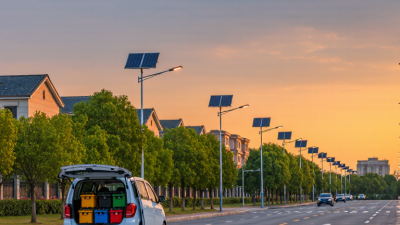
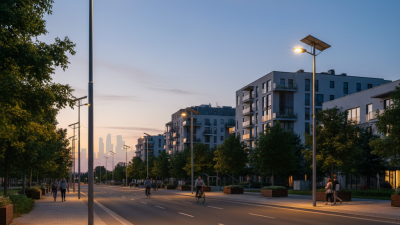
How Solar Street Lights Generate and Store Energy

Solar street lights generate electricity through photovoltaic panels mounted above the lamp. During daylight, silicon cells convert sunlight into direct-current power. A charge controller regulates this flow and protects the battery from excessive charging. This process continues even under cloud cover, although output becomes weaker.

At dusk, a light sensor signals the controller to activate the LED fixture. Stored energy then powers the lamp through the night. Efficient LEDs use less electricity, leaving more capacity for longer operation. In practical installations, battery chemistry, temperature, and panel angle strongly affect performance. Cold weather can reduce battery efficiency. Dust can also lower panel output.

For global buyers, system sizing deserves careful attention. A location with five sunny hours may need different equipment than a region with frequent rain. I have seen designs fail because they used average sunlight data only. The calculation is never perfect. Engineers should review seasonal irradiation, nighttime hours, and expected cloudy days. A battery with two or three nights of reserve can improve reliability, but it also increases cost and weight. Some systems use lithium batteries for compact storage, while others use lead-based batteries for lower initial costs. Each choice involves maintenance and service considerations. The controller should include low-voltage protection and safe temperature limits. Installers must also check shading from trees, buildings, and nearby structures. Small shadows matter.

Top 10 Dusk-to-Dawn Solar Street Lights for Global Buyers

How Solar Street Lights Generate and Store Energy

Representative 24-hour energy profile for a 200 W photovoltaic panel, a 60 W LED luminaire with nighttime dimming, and a 12 V 100 Ah battery. Solar energy is generated during daylight, while the battery stores the surplus and supplies the LED after sunset. Actual output varies with location, season, weather, panel orientation, battery efficiency, and lighting settings.

Key Features of the Top 10 Solar Street Light Types

Top 10 Dusk to Dawn Solar Street Lights for Global Buyers

The top ten solar street light types differ by site, control method, and maintenance needs. All-in-one lights combine the panel, battery, controller, and LED housing. Split solar lights place the panel separately, improving panel orientation. Integrated-panel models suit narrow roads and compact spaces. Motion-sensor lights raise brightness when pedestrians approach. Adaptive-dimming lights reduce output during quiet hours. Smart IoT lights add remote monitoring, fault alerts, and usage data. Hybrid solar-grid lights provide backup during long cloudy periods. High-mast models cover wide roads, yards, and logistics areas. Decorative solar lights prioritize appearance in parks and residential streets. Commercial roadway lights emphasize high lumen output, stronger poles, and longer battery storage.

Small details decide performance. A 2024 IEA report recorded about 420 GW of new global solar PV capacity in 2023, showing strong supply growth. Yet larger supply does not guarantee reliable lighting. The World Bank’s Lighting Global quality framework stresses battery safety, measured runtime, and verified performance. Buyers should check dusk-to-dawn operation, not only panel wattage.

Lithium iron phosphate batteries usually offer useful cycle life, but cold climates still reduce capacity. A practical test should measure light output at midnight, after rain, and before sunrise. It should also inspect cable seals and pole corrosion. IEC 60598-2-3 alignment can support safer road-lighting specifications. Still, one weakness remains: sensor settings are often poorly adjusted. Brightness may fall too early. Field trials matter.

How to Compare Performance, Installation, and Maintenance

Choosing a dusk-to-dawn solar street light means comparing more than advertised brightness. Check the lumen output and beam angle together: a narrow beam may illuminate a driveway well but leave the path edges dark. Battery capacity and solar panel size also matter. Ask how the light performs after several cloudy days, not only on a fully charged evening. Runtime claims can vary with temperature, panel placement, and motion-sensor settings. Real sites are rarely perfect.

Installation affects performance. Mount the panel where roofs, trees, or walls will not shade it for much of the day. A south-facing position often helps in the Northern Hemisphere, but local conditions matter more than a rule of thumb. Check pole height, mounting hardware, and cable reach before installation. Keep the panel accessible for cleaning. Even a thin layer of dust can reduce charging, and a poorly aimed light can bother nearby homes.

Tips: Compare warranty terms for the battery, panel, and fixture separately. Look for replaceable batteries and clear maintenance guidance. Test the light at dusk, then inspect the beam from the ground. Small adjustments can help. One detail is easy to miss: seasonal shadows may change, so review the installation after nearby foliage grows.

Top 10 Dusk to Dawn Solar Street Lights for Global Buyers — How to Compare Performance, Installation, and Maintenance

Comparison guide to ten common system configurations, not specific products. Figures are indicative planning ranges: actual output and overnight runtime depend on climate, season, shading, control settings, battery condition, and product design.

Rank System Type Typical LED Output Typical Solar Panel Typical Battery Capacity Runtime Planning Suitable Applications Installation Considerations Maintenance Considerations Comparison Note
1 Compact integrated 500–1,500 lm 5–15 W 20–60 Wh Typically designed for one night; confirm performance after several low-sun days. Garden paths, small entrances, and short private lanes Mounting is straightforward; check that the panel receives unobstructed sunlight. Clean the exposed panel and inspect fasteners and seals periodically. Simple installation, but limited reserves may make it less suitable for prolonged cloudy weather.
2 Residential all-in-one 1,000–3,000 lm 10–30 W 40–120 Wh One dusk-to-dawn cycle may be possible at reduced or programmed output; verify the rated test conditions. Driveways, residential streets, and small parking areas Confirm pole compatibility, mounting height, and the intended light distribution. Keep the panel clean; check battery health and enclosure condition in line with the supplier's guidance. Compare sustained light output, not just a brief maximum-output figure.
3 Motion-sensor security 1,000–4,000 lm when activated 10–40 W 40–160 Wh Low standby output with brighter motion-triggered periods can reduce energy use; runtime depends on activity levels. Gates, yards, building perimeters, and low-traffic access roads Set sensor direction and range to limit triggers from moving vegetation or nearby traffic. Test sensor coverage and clean the panel; inspect sensor lenses and mounting hardware. Check standby brightness, activation duration, and sensor performance as separate specifications.
4 Split-panel compact system 1,500–4,000 lm 20–50 W 60–200 Wh Often configured for overnight operation with dimming; verify expected autonomy for the local solar resource. Village roads, parking bays, and sites where the luminaire is shaded Panel and light are mounted separately; allow for cable routing, secure brackets, and panel orientation. Inspect cable glands, connectors, panel surface, and battery enclosure. A separate panel can be positioned in sunlight while the light stays where illumination is needed.
5 Medium-output all-in-one 3,000–8,000 lm 30–80 W 120–400 Wh Overnight operation is generally dependent on dimming profiles and adequate daily solar charging. Local roads, small commercial lots, and community spaces Check pole loading, wind exposure, mounting diameter, and the recommended installation height. Schedule panel cleaning and periodic checks of battery, seals, and structural fittings. Review a photometric layout to confirm road coverage and avoid dark gaps or excessive glare.
6 Split-system roadway light 4,000–10,000 lm 50–120 W 200–600 Wh Autonomy varies significantly with battery size, weather, operating profile, and local peak-sun hours. Collector roads, larger parking areas, and public-space approaches Plan panel orientation, wind loading, pole structure, cable protection, and access for servicing. Check wiring connections and battery condition; keep the panel free of dust, leaves, or snow. Compare delivered light on the road surface rather than relying on lumens alone.
7 High-capacity split system 8,000–15,000 lm 100–200 W 400–1,000 Wh Can be configured with additional reserve, but cloudy-weather autonomy must be calculated for the site. Wide roads, industrial access routes, and larger outdoor facilities Requires careful structural design, secure battery placement, and suitable access for installation equipment. Include battery inspection, electrical checks, panel cleaning, and corrosion checks in a maintenance plan. Ask for battery chemistry, usable capacity, temperature limits, and replacement procedure.
8 High-output system with adaptive dimming 6,000–15,000 lm, with scheduled output levels 80–200 W 300–1,000 Wh Programmable dimming can help balance overnight lighting and stored energy; results depend on the control profile. Roads and sites with changing overnight activity Set and verify schedules, dimming levels, and sensor settings during commissioning. Periodically verify controller settings, battery condition, and actual nighttime operation. Request the full operating schedule; the maximum-output rating alone does not describe all-night performance.
9 Remote-site system with larger reserve 3,000–10,000 lm 80–180 W 400–1,200 Wh Designed around site-specific reserve requirements; extended autonomy requires a solar and load assessment. Remote roads, off-grid facilities, and locations with limited service access Assess theft risk, foundation, panel exposure, battery accessibility, and transport to the site. Plan periodic visits and confirm that batteries and enclosures remain serviceable and protected. Prioritize documented autonomy assumptions and accessible replacement parts.
10 Modular system for project deployment 4,000–15,000 lm, depending on configuration 50–200 W 200–1,000 Wh Components can be sized to local conditions; performance depends on the selected panel, battery, and lighting profile. Multi-site projects, varied road sections, and locations with different solar conditions Standardize interfaces and installation procedures while allowing site-specific sizing. Keep component records, spare parts, and a consistent inspection schedule across sites. Useful where maintainability and consistent specifications matter; verify component compatibility before procurement.

Buyer checklist: Request a site-specific lighting calculation, verified battery usable capacity, panel and battery specifications, operating-temperature limits, applicable ingress-protection rating, warranty terms, spare-parts availability, and a written autonomy calculation based on local sunlight and the proposed lighting schedule. Lumens describe light output, not roadway uniformity or illuminance.

Choosing the Right Solar Street Light for Global Applications

Choosing a solar street light for global applications starts with the site, not the catalog. A coastal road, a dusty village lane, and a snowy parking area place very different demands on equipment. Check local sunlight across the year, including cloudy-season conditions. A panel that performs well in summer may not recharge the battery through several overcast days. Ask for autonomy data and test results, not just a headline runtime.

Match light output to the task. A pedestrian path needs even visibility, while a wide junction may require stronger optics and careful pole spacing. Review mounting height, beam distribution, battery capacity, and the hours of operation after dusk. Small details matter. Salt spray can corrode fittings; dust can coat panels; low winter temperatures can reduce battery performance. Look for suitable weather protection and materials, then confirm maintenance access is realistic for the location. Remote sites need components that local technicians can inspect and replace.

Compare the full system, not only the lamp. A motion sensor may extend runtime, but frequent activity can change expected performance. Request clear specifications for operating temperature, charging, warranty coverage, and replacement parts. Independent test documentation is useful, though it may not reflect every installation. There is no perfect universal model. Even a careful selection can miss a local constraint, so a pilot installation can reveal glare, shadows, or drainage problems before wider deployment.