China Top 10 Solar Street Light Dusk To Dawn Suppliers?
Choosing a dependable Solar Street Light Dusk To Dawn supplier in China requires more than comparing catalog prices. A bright product photo cannot reveal battery aging, controller quality, or performance during several cloudy nights. This guide introduces ten leading Chinese suppliers for buyers seeking practical outdoor lighting solutions. It considers manufacturing experience, product range, certifications, project records, warranty terms, and after-sales support. These details often matter more than a low quotation.
Real projects provide useful evidence. A supplier serving rural roads may understand different needs from one focused on residential gardens. We look at solar panel efficiency, LED output, lithium battery protection, lighting duration, waterproof construction, and intelligent controls. We also consider whether a company offers sample testing, technical drawings, installation guidance, and stable communication. Small details can prevent expensive mistakes.
No ranking is perfect. Supplier data can change, and online information may be incomplete. Buyers should verify factory capabilities, certificates, test reports, and recent customer references before placing an order. Local weather also matters. A system designed for a dry region may struggle under long rain periods or heavy snow. Therefore, this selection is a starting point, not a final decision. It aims to help importers, contractors, distributors, and project owners compare China’s top Solar Street Light Dusk To Dawn suppliers with clearer expectations. Careful questions still matter. The best choice is rarely the cheapest one.
What Are Dusk-to-Dawn Solar Street Lights?
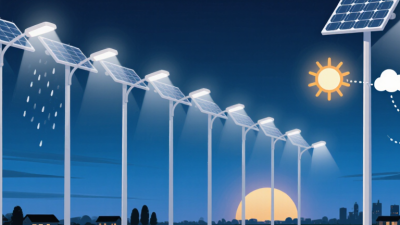
Dusk-to-dawn solar street lights are outdoor lighting systems that collect sunlight during the day and illuminate roads after dark. A photovoltaic panel charges a battery, while a controller manages energy flow. At sunset, a light sensor or programmed timer activates the LED fixture. It switches off near sunrise, reducing manual operation and unnecessary grid power. In field use, this cycle suits village lanes, parking areas, pathways, and remote sites. No trenching is usually required. Yet performance depends on more than the lamp’s advertised wattage.
A reliable supplier should explain battery chemistry, panel size, operating temperature, waterproof rating, and expected autonomy. Ask for tested data, not only bright product images. In cloudy regions, two or three reserve nights may be important. Mounting height, tree shadows, dust, and winter sunlight can change results. I have found that poor panel orientation often causes more complaints than weak LEDs. That detail is easy to overlook. Some specifications sound precise but lack test conditions, so careful buyers should ask questions.
Tips: Check whether the sensor responds smoothly at dusk, instead of turning on too early. Request an installation guide and a clear warranty process. Compare usable lighting hours, not just battery capacity. Clean the panel periodically, especially near roads or construction areas. A small trial installation can reveal glare, dark corners, and charging limits before a larger purchase. This step feels slower, but it prevents expensive assumptions.
How to Evaluate China’s Solar Street Light Suppliers
Choosing among China’s top 10 solar street light dusk-to-dawn suppliers requires more than comparing catalog prices. Evaluate the complete system: panel output, battery chemistry, controller protection, LED efficiency, pole design, and warranty terms. Ask for dated test reports, not only polished product photos. A reliable supplier should explain performance at your project’s latitude, temperature range, and winter sunlight conditions. Request a sample unit and inspect its finish, cable glands, fasteners, and charging behavior over several nights. Small details matter.
Tips: Build a comparison sheet. Record battery capacity, usable watt-hours, IP rating, lux data, delivery time, spare-part policy, and payment milestones. Confirm whether stated autonomy uses real lighting loads or ideal laboratory assumptions. Visit the factory remotely if travel is difficult, and ask for serial-numbered inspection records.
Supplier evaluation should also cover communication and after-sales capability. Can the technical team provide lighting simulations, installation drawings, and fault guidance in clear English? Check whether warranty exclusions cover battery aging, water ingress, and extreme heat. Contact two recent customers, with permission, and ask about replacement speed during failures. A supplier may pass a quotation review yet struggle with field support. I have seen projects focus too heavily on low price; that decision can increase maintenance costs later. My own assessment is never perfect, because climate, road width, and traffic patterns change results. Recheck assumptions before signing. Look for evidence, not promises.
Top 10 Chinese Suppliers of Dusk-to-Dawn Solar Street Lights
China’s top ten suppliers of dusk-to-dawn solar street lights usually serve municipal, residential, and industrial projects. Their product ranges often include 20W to 80W LED fixtures, monocrystalline panels, lithium iron phosphate batteries, and smart controllers. Some suppliers focus on compact residential lamps. Others build high-output systems for wider roads and parking areas.
A reliable supplier should provide clear photometric files, battery capacity data, and panel specifications. Look for IP65 or IP66 protection, tempered glass, corrosion-resistant aluminum, and adjustable mounting brackets.
Three to five nights of battery autonomy is useful in cloudy regions. Ask for operating temperature details as well. A sample test can reveal dimming behavior, charging speed, and actual illumination after midnight.
Factory experience matters, but certificates alone are not enough. Review production photos, inspection records, warranty terms, and replacement procedures. Independent testing is preferable when project quantities are large. I would also compare lighting performance at 2 a.m., not only at full charge. This detail is often missed.
No supplier is perfect. Some may offer strong hardware but weak documentation, while others respond quickly but provide limited customization. A careful buyer should confirm pole compatibility, installation drawings, spare parts, and delivery schedules before signing a purchase agreement.
Key Products, Technologies, and Market Applications
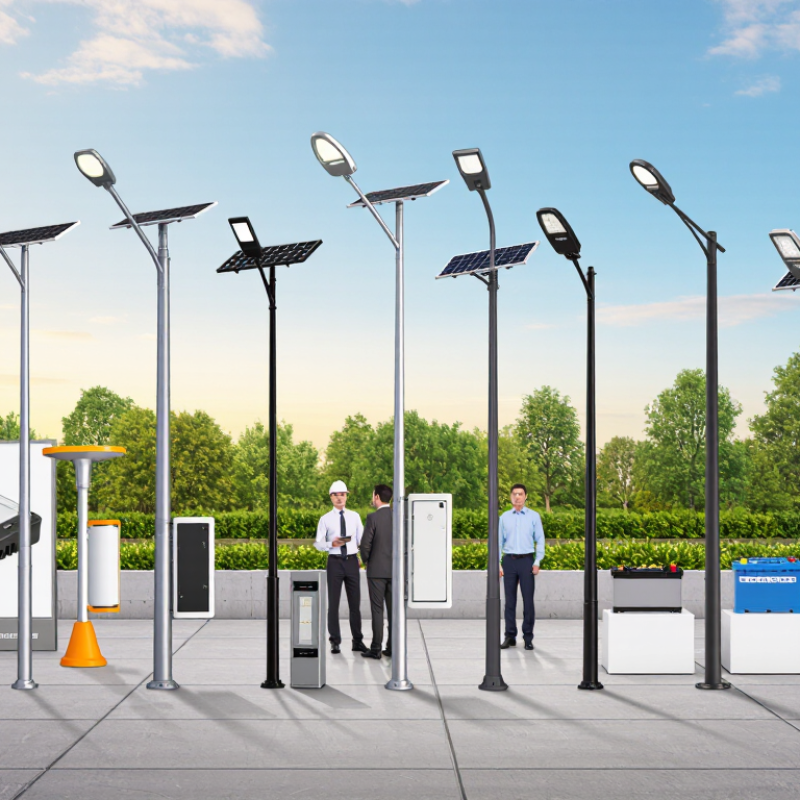
China’s top solar street light suppliers usually serve different project needs rather than one universal market. Their key products include integrated solar lamps, split-type systems, all-in-one units, and solar roadway lights. Product selection should match road width, mounting height, lighting hours, and local weather. A coastal village needs stronger corrosion protection. A remote highway needs larger battery capacity and easier maintenance.
Modern systems combine monocrystalline photovoltaic panels, lithium or lithium iron phosphate batteries, LED modules, and intelligent controllers. Motion sensors can reduce power use when streets are empty.
Some controllers support remote monitoring through wireless networks. Useful data includes battery voltage, charging status, lamp faults, and daily operating hours.
Suppliers should provide test reports, protection ratings, battery cycle data, and clear warranty conditions. Claims about “maintenance-free” operation deserve careful checking.
Market applications range from residential roads and rural paths to industrial parks, campuses, ports, and public parking areas. In cloudy regions, lighting performance depends heavily on battery sizing and solar resource analysis.
In practice, installation teams should inspect shadows from trees and buildings before fixing poles. A design may look excellent on paper but fail after several rainy days. That weakness should be discussed openly. Buyers can request pilot installations, field records, spare-part plans, and photometric results before placing large orders. Supplier reliability also depends on communication, documentation, and after-sales response, not only factory capacity.
How to Select the Right Supplier for Your Project
China Top 10 Solar Street Light Dusk To Dawn Suppliers?
Choosing the right supplier requires more than comparing catalog prices. IRENA reported 345 GW of new solar capacity worldwide in 2023. This growth increases product variety, but quality still differs sharply. Shortlist suppliers that provide complete test reports, production records, and project references. Ask for the battery chemistry, usable capacity, operating temperature, and expected nighttime runtime. Numbers should match real conditions.
For dusk-to-dawn systems, request photometric files and verify the claimed lighting level at ground height. Check whether the controller supports seasonal dimming, motion sensing, and fault records. The International Electrotechnical Commission publishes relevant requirements for lighting equipment, while ISO 9001 can indicate controlled processes. It does not prove excellent products. That distinction matters.
I have seen suppliers promise three cloudy nights without showing local solar data. Treat that claim carefully. Use PV performance estimates for the project latitude, winter irradiance, panel tilt, and shading. Request an independent battery test, ingress protection evidence, and thermal test results. Review warranty exclusions, spare-part availability, packaging, and installation guidance before signing. A small pilot installation can reveal weak charging, glare, or poor pole integration. It costs more initially. It may prevent expensive replacements. No checklist is perfect; site monitoring and honest supplier communication still decide long-term performance.
China Top 10 Solar Street Light Suppliers: How to Select the Right Supplier for Your Project
Use this transparent 100-point evaluation framework to compare suppliers without relying on brand names. The weighting emphasizes lighting performance, system reliability, compliance, and long-term service value.
How to use the chart: Score each supplier against every criterion, multiply the score by the corresponding weight, and compare the final results. Request test reports, datasheets, warranty terms, battery specifications, photometric files, and project references before making a final decision.