Why Choose Battery Operated Security Lights for Global Buyers?
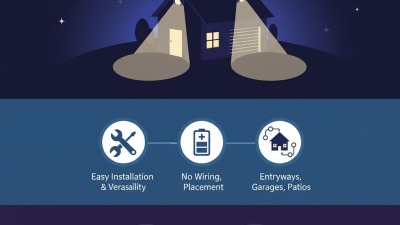
For global buyers, choosing a Security Light Battery Operated model is rarely a simple purchasing decision. It involves safety, installation conditions, climate, maintenance, and long-term operating costs. Unlike wired lighting, battery-powered units can illuminate gates, walkways, garages, and temporary work areas without trenching or complex electrical work. This flexibility matters in remote properties, rental buildings, and locations where grid access is limited. A practical example is a side entrance that needs light only when movement is detected. In that situation, motion activation can reduce unnecessary battery use.
However, convenience should not replace careful evaluation. Buyers should examine battery capacity, charging options, sensor range, brightness, weather resistance, and replacement-part availability. IP ratings can offer useful protection information, but they should be checked against the manufacturer’s test documentation. Cold winters, heavy rain, dust, and strong sunlight may affect performance differently. User reviews can reveal real installation problems, such as weak mounting brackets or delayed sensors. They are helpful, but not always complete.
No product is perfect.
Reliable suppliers should provide clear specifications, warranty terms, safety instructions, and consistent after-sales support. Independent testing and traceable product information can strengthen purchasing confidence, especially for distributors serving several regions. Still, advertised runtime may differ from everyday results. Frequent activation, poor charging conditions, and aging batteries can reduce performance. This guide explores the practical reasons global buyers consider battery-operated security lighting, while also examining its limitations. A careful choice may protect property, reduce installation effort, and deliver dependable illumination where it is needed most.
What Are Battery-Operated Security Lights? LEDs, PIR Sensors, and Batteries
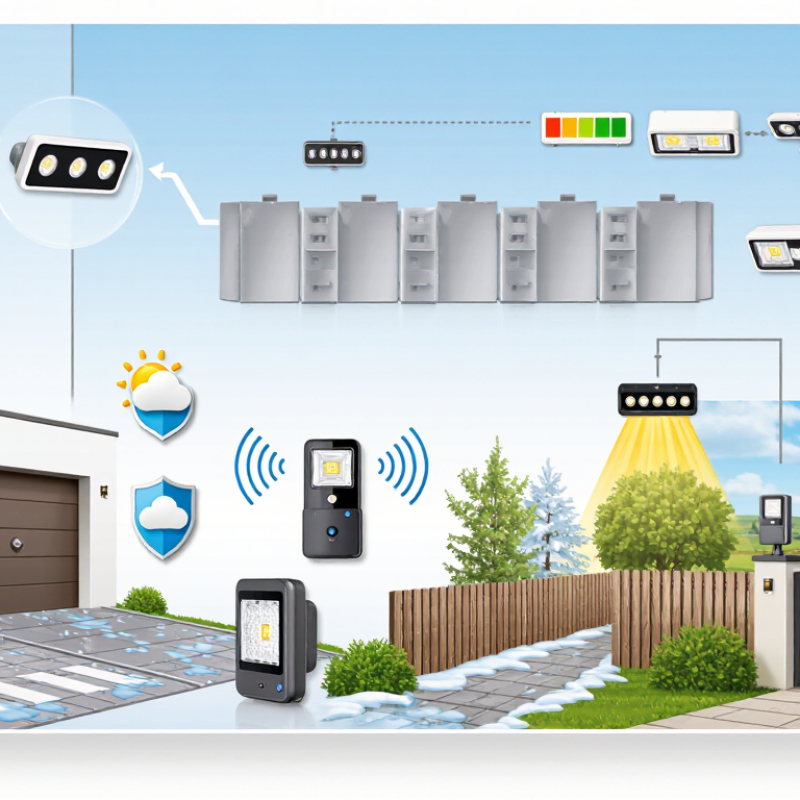
Battery-operated security lights combine three practical parts: an LED, a passive infrared (PIR) sensor, and replaceable or rechargeable batteries. The PIR sensor detects changes in infrared energy, such as a person crossing a path. It then switches on the light for a set period. No mains wiring is needed, which can help at a shed door, side gate, or rental property. But placement matters. A sensor facing a warm wall or busy walkway may trigger more often than expected.
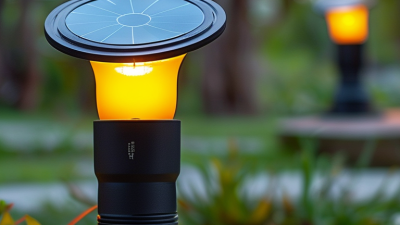
LEDs produce bright light while using less energy than older incandescent lamps. The U.S. Department of Energy reports that residential LEDs use at least 75% less energy and last up to 25 times longer than incandescent lighting. That comparison is useful, but it does not predict battery life by itself. Battery runtime also depends on brightness, temperature, activation frequency, and the light’s settings. A unit triggered dozens of times each night may need new batteries sooner. Small detail, big difference. Check the product’s stated battery type, sensor range, weather rating, and estimated runtime under motion-triggered use. Those figures can vary between test conditions and real outdoor use. A shaded entrance may also receive less daylight for solar charging, if the model includes a panel.
How Efficient Are LEDs? U.S. DOE Reports Up to 75% Lower Energy Use
For battery-operated security lights, LED efficiency can make a real difference. The U.S. Department of Energy reports that LED bulbs use at least 75% less energy than traditional incandescent bulbs. That comparison matters: lower power demand can help a battery-powered light run longer between replacements or recharges, depending on battery size, sensor settings, temperature, and how often it activates. It is not a guarantee of a specific runtime.
Consider a side gate where a light switches on several times each evening. An efficient LED can provide useful illumination without drawing as much energy as an incandescent source. Many LEDs also reach full brightness immediately, which suits motion-triggered use. A well-aimed beam can make a doorstep or path easier to see, while reducing wasted light on a wall or neighboring window.
Small details matter. Check the product’s stated battery life under realistic use, and remember that frequent triggers shorten it. Cold weather may affect battery performance, too. That part is easy to overlook. LED efficiency helps, but it cannot compensate for poor placement, weak batteries, or a sensor that activates all night. When comparing lights, look for clear runtime information and test coverage at the actual mounting height. DOE figures offer a useful benchmark, not a promise for every fixture.
Why Choose Battery Operated Security Lights for Global Buyers? — How Efficient Are LEDs? U.S. DOE Reports Up to 75% Lower Energy Use
| Comparison Dimension |
Battery-Operated LED Security Light |
Wired LED Security Light |
Buyer Consideration |
| Power connection |
Runs on replaceable or rechargeable batteries; no mains connection is required at the fixture. |
Connects to a mains supply; installation may require suitable wiring and electrical work. |
Battery operation can suit locations without convenient wiring. Check local electrical and product regulations. |
| LED energy efficiency |
LEDs use substantially less electricity than incandescent lighting for comparable light output. |
The same LED efficiency benefit applies; energy is drawn from the mains supply. |
The U.S. Department of Energy reports that residential LEDs use at least 75% less energy than incandescent lighting. |
| Illustrative energy comparison |
A battery-powered fixture’s electricity use depends on its LED power, operating time, and battery charging or replacement. |
Example: a 9 W LED operating 5 hours daily uses about 16.4 kWh per year. |
For comparison, a 60 W incandescent lamp used for the same time uses about 109.5 kWh per year. These figures are calculated from rated wattage × hours; the lamps are illustrative, not a product specification. |
| Operating duration |
Runtime varies with battery capacity, light output, temperature, and how often the light activates. |
Runtime depends on the power supply and controls; it is not limited by an onboard battery. |
Compare tested runtime and battery capacity at the intended brightness and operating conditions. |
| Installation and placement |
Can be mounted where wiring is unavailable, subject to the model’s mounting and environmental requirements. |
Placement is affected by access to a suitable power connection and installation requirements. |
Check mounting method, ingress protection rating, temperature range, and applicable local standards. |
| Maintenance considerations |
Batteries need recharging or replacement; service frequency depends on use and battery type. |
No fixture battery replacement is needed, though routine inspection and cleaning may still be required. |
Include battery availability, replacement cost, and disposal or recycling options in lifecycle planning. |
| Useful specifications to compare |
Lumens, battery chemistry and capacity, stated runtime, sensor settings, and charging method. |
Lumens, input wattage, sensor settings, voltage compatibility, and installation requirements. |
Compare measured light output and verified product specifications rather than relying on wattage alone. |
|
Source: U.S. Department of Energy, “LED Lighting.” Energy example values are arithmetic illustrations based on 5 hours of use per day and the stated lamp wattages; actual results vary by product and usage.
|
How Does IP Rating Protect Lights? IEC 60529 Standards for Outdoor Use
Battery-operated security lights suit buyers who need flexible placement near gates, sheds, and paths without fixed wiring. For outdoor use, the IP code helps compare protection against dust and water. IEC 60529, published by the International Electrotechnical Commission, defines this rating system. The first digit describes solid-particle protection; the second describes water protection. For example, IPX4 indicates resistance to water splashing from any direction, while IPX5 covers water jets under specified test conditions. IP6X means dust-tight. These ratings describe controlled tests, not every storm or installation. A strong rating helps, but it is not a promise of unlimited weather resistance.
Tips: Match the rating to the site. Under a roof, occasional splashes may be the main concern. On an exposed wall, consider a higher water-protection rating. Check that the battery cover, gasket, and cable entry are also sealed correctly.
For global buyers, confirm the complete product’s declared IP rating and test basis, rather than relying on a sensor or lamp-head rating alone. IEC 60529 is the key reference; ask suppliers for test documentation tied to the finished model. Inspect the seal after replacing batteries, and mount the light as instructed. Small gaps can matter. Even careful checks cannot prevent every failure, and cold, heat, or aging seals may reduce protection over time.
Why Choose Battery-Operated Security Lights? Understanding IP Ratings
Battery-operated security lights can be installed where wiring is impractical. For outdoor use, check the product’s IP rating: under IEC 60529, the second digit indicates protection against water ingress. The chart summarizes common water-protection levels.
How to read it: Higher water-rating digits indicate different tested levels of water protection, not a guarantee of suitability for every installation. IPX8 immersion conditions are specified for the product; check the manufacturer’s stated limits and the complete IP rating, including its first digit for solid-object protection.
How Is Runtime Calculated? Battery Watt-Hours, Lumens, and PIR Duty Cycles
Battery runtime is an energy calculation, not a lumen calculation alone. Multiply battery voltage by amp-hours to estimate watt-hours, then allow for conversion losses and reserve capacity. For example, a 12.8 V, 10 Ah battery stores 128 Wh nominally. At 85% usable energy, about 109 Wh remains. The U.S. Department of Energy’s 2022 Solid-State Lighting R&D Opportunities report discusses LED efficacy levels around 150 lumens per watt for efficient products. At that efficacy, an 800-lumen light needs roughly 5.3 W while on. Actual performance varies with optics, temperature, and driver losses.
PIR duty cycle changes the average load. If the light runs for 30 seconds after each detection and activates 12 times per hour, it operates for 10% of that hour. A 5.3 W lamp then averages about 0.53 W, before sensor standby draw. Add, for example, 0.15 W of standby power, and the estimated runtime becomes about 160 hours. This is a planning estimate, not a guarantee; frequent movement or long hold times can sharply reduce it.
Tips: Check battery watt-hours, measured standby draw, and the PIR hold-time setting. Test the light outdoors for several nights. Real sites are messy, and that matters.