Best Solar Street Light For Home in 2026 What to Consider?
As the demand for sustainable energy solutions increases, solar technologies are gaining momentum. Solar street light for home applications are becoming popular. According to a recent report by Markets and Markets, the global solar street lighting market is projected to reach $10 billion by 2026. This growth indicates a strong shift towards renewable energy sources in residential areas.
Homeowners are seeking eco-friendly alternatives to traditional street lighting. Solar street lights offer several advantages, including energy efficiency and low maintenance costs. Additionally, a study by the International Renewable Energy Agency shows that solar technologies can reduce electricity costs by up to 75%. This makes solar street lights an attractive option for homes looking to enhance outdoor spaces while saving money.
However, choosing the best solar street light for home use can be challenging. Many products vary in efficiency, battery life, and brightness. It’s essential to consider factors such as solar panel quality and installation requirements. While solar street lights provide numerous benefits, they may not be the perfect solution for every home. Some areas with low sunlight exposure could experience performance issues. Homeowners must weigh these factors carefully when making a decision.
Best Solar Street Light Features to Look For in 2026
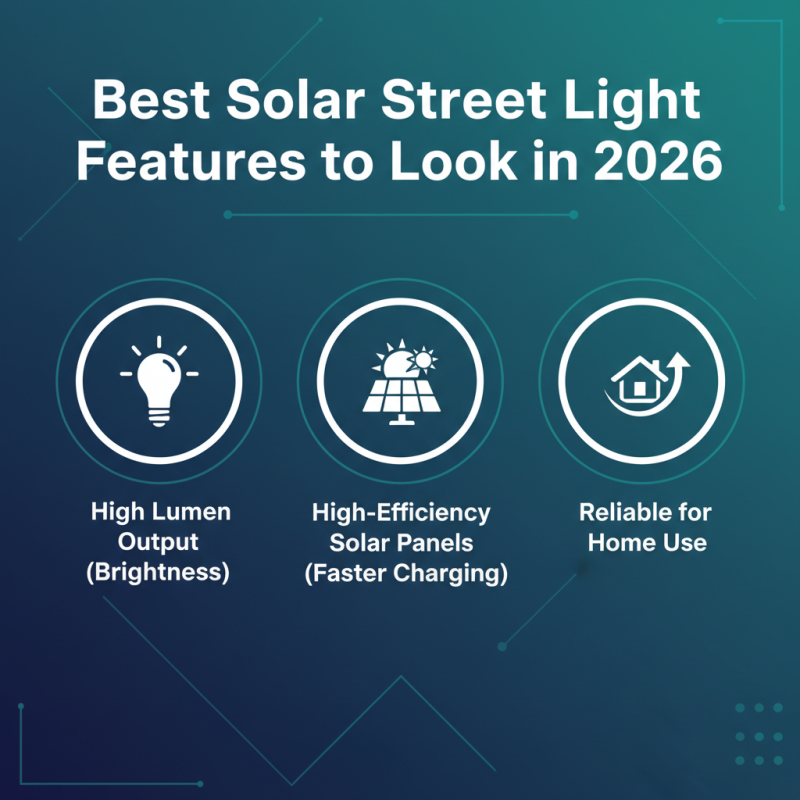
When choosing the best solar street light for home use in 2026, several key features stand out. Brightness is essential. Look for lights with high lumen output for effective illumination. This will ensure that your outdoor areas are well-lit. The solar panel's efficiency matters too. High-efficiency panels charge faster even on cloudy days.
Battery capacity is another crucial factor. A larger battery will provide longer illumination after sunset. Durability is vital as well. The lights should withstand harsh weather conditions. Look for robust materials like aluminum or high-grade plastic. Waterproof features are also a must.
Additionally, consider installation flexibility. Some lights offer easy setups without wiring. This can save time and effort. Remote control functionalities can enhance convenience, allowing for adjustments from a distance. Reflect on your specific needs. Not every feature may be necessary for your situation. Identifying what matters most will lead to a better choice.
Comparing Different Solar Street Light Technologies
When considering solar street light technologies, it's crucial to understand the different options available. LED technology is widely recognized for its energy efficiency and longevity. It consumes less power and provides bright illumination, making it ideal for residential use. However, the initial cost can be higher compared to traditional lighting. Many homeowners face the dilemma of choosing between upfront costs and long-term savings.
Another option is solar-powered lighting systems that utilize integrated batteries. These systems harness solar energy during the day, converting it into electricity for nighttime use. This technology offers the advantage of independence from grid electricity. Nonetheless, battery life can vary, and replacement costs may arise, leading to potential ongoing expenses. Not all solar panels have the same efficiency levels, which can affect performance.
There are also hybrid systems that combine solar energy with wind or conventional power. These units can be reliable during low-sunlight conditions. Yet, they require more maintenance and have a complexity that might be daunting for some users. Homeowners should assess their specific needs, including environmental factors and installation costs, to make informed decisions. It’s important to recognize that no system is perfect; each has its pros and cons.
Best Solar Street Light For Home in 2026 - Comparing Different Solar Street Light Technologies
| Light Technology |
Lumen Output |
Solar Panel Type |
Battery Capacity |
Run Time |
Installation Type |
| LED |
1500 - 2000 lumens |
Monocrystalline |
12Ah |
8 - 12 hours |
Pole-mounted |
| Fluorescent |
800 - 1200 lumens |
Polycrystalline |
10Ah |
6 - 10 hours |
Wall-mounted |
| Smart Solar |
1000 - 1500 lumens |
Monocrystalline |
15Ah |
10 - 15 hours |
Hybrid (ground & pole) |
| Solar Motion Sensor |
600 - 900 lumens |
Polycrystalline |
8Ah |
3 - 5 hours |
Pole-mounted |
Top Brands for Solar Street Lights in 2026
When considering solar street lights for home use in 2026, many brands are gaining attention for their innovation and reliability. The International Renewable Energy Agency (IRENA) reported that solar street lighting technology is rapidly expanding, with a projected growth of 12% annually. This trend highlights the increasing demand for eco-friendly solutions.
Top brands focus on efficiency and durability. Many products now feature advanced LED technology, which can last up to 50,000 hours. Furthermore, solar street lights equipped with smart sensors adjust brightness according to surroundings. This enhances energy conservation. However, not all brands prioritize quality. Some cheaper options may have unreliable battery performance, particularly in less sunny climates.
As consumers, we must scrutinize specifications closely. Look for lights that offer robust warranties. Reliability metrics, such as lumen output and battery life, should be evaluated. Independent reviews can also provide valuable insights. Understanding these elements is crucial for making the right choice in a market filled with varying quality levels.
Solar Street Light Performance Comparison 2026
Cost Analysis: Investing in Solar Street Lights for Home
When considering the cost analysis of investing in solar street lights for home use, it is essential to evaluate the long-term benefits. Research shows that solar street lights can reduce energy costs by up to 75%. The initial investment in solar lighting can be higher than traditional options, but the savings accumulate over time. The average payback period for solar street lights is around 3 to 5 years, depending on local utility rates and sunlight availability.
Maintenance is another critical aspect of the cost equation. Solar street lights typically require less maintenance than conventional lights. A report from the Solar Energy Industries Association indicates that solar technology is becoming increasingly reliable, with many products featuring durable batteries that last nearly a decade. However, users must still be aware of potential issues with battery replacement and system efficiency over time, which can impact overall savings.
Installation costs also play a significant role. While solar street lights are easier to install in remote areas, upfront costs can vary widely. A detailed study by the National Renewable Energy Laboratory highlights that the cost of good-quality solar lights can range from $1,000 to $3,000 per unit. Homeowners should consider these factors carefully, as local incentives and grants may also influence the overall cost and feasibility of solar investments.
Installation Tips for Solar Street Lights in Residential Areas
When considering solar street lights for residential areas, installation is key. Choose locations that receive ample sunlight. Trees or buildings can create shadows, reducing efficiency. Measure the spot well to ensure maximum exposure to the sun.
Use a sturdy pole for mounting. Ensure it can withstand local weather conditions. The light should be positioned at an optimal height for illumination. Check the angle of the solar panel too. It needs adjustment for season changes.
Don’t forget about wiring and positioning. Solar lights often come with various mounting options. Think about accessibility for maintenance. You might need to adjust positions as trees grow or other obstructions emerge. Planning is crucial in maximizing benefits for your home environment. Making these considerations helps establish reliable lighting, enhancing both security and aesthetics.