Leave Your Message

10 Best Solar Flood Light 200w for Global Buyers

Choosing the right Solar Flood Light 200w is not simply a matter of selecting the highest wattage. A powerful lamp may still disappoint if its battery, solar panel, or heat management is weak. Global buyers must consider climate, installation height, beam coverage, charging time, and nighttime runtime. A light used beside a warehouse needs different performance from one installed over a garden gate.

Lighting engineer Dr. Martin Green offers a practical reminder: “Reliable illumination depends on the complete system, not wattage alone.” This principle guides our selection of the 10 Best Solar Flood Light 200w models for international buyers. Each option should be examined through measurable details, including claimed lumens, battery capacity, panel efficiency, motion-sensor response, waterproof protection, and warranty support.

Real conditions matter. A panel facing dusty skies may charge more slowly. A coastal installation may need stronger corrosion resistance. Cold nights can also reduce battery performance. Small details become expensive problems.

This guide compares products for homes, farms, parking areas, construction sites, and commercial properties. It also considers installation flexibility, remote-control functions, lighting modes, and replacement support. Product descriptions are not always complete. That is worth admitting.

Buyers should verify regional electrical requirements, shipping conditions, and after-sales service before ordering. A 200-watt label can sound impressive, yet actual brightness and runtime may vary widely. The best choice balances dependable lighting, practical maintenance, reasonable cost, and honest specifications. This comparison aims to make that decision clearer, while leaving room for careful verification.
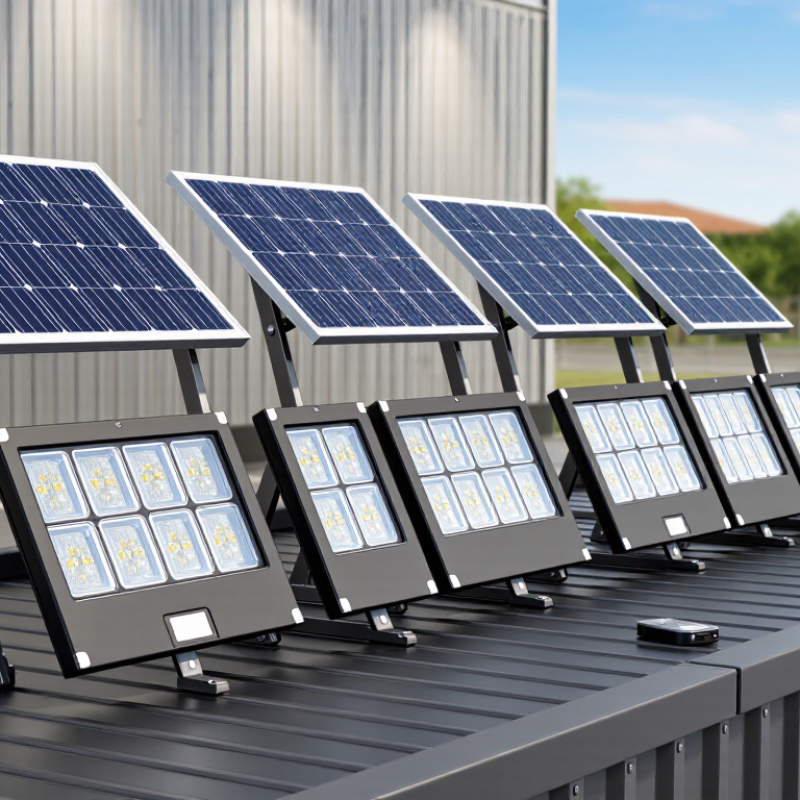
10 Best Solar Flood Light 200w for Global Buyers

What Defines a 200W Solar Flood Light: Output, Efficacy, and Runtime Benchmarks

A genuine 200W solar flood light should be judged by electrical input, not its advertised “equivalent” rating. At 120–180 lumens per watt, a true 200W LED load could produce roughly 24,000–36,000 lumens. The U.S. Department of Energy’s solid-state lighting research reports advanced LED packages above 200 lumens per watt, but complete fixtures perform lower after optics, drivers, and heat losses. Read the test sheet carefully.

Runtime is less glamorous. It is the hard number. A 200W load running for eight hours needs 1.6 kWh before conversion losses. At a nominal 12.8V, that means about 125Ah of usable battery capacity. A practical system needs more reserve, because cold weather, aging cells, and cloudy charging reduce availability. NREL’s PVWatts documentation uses a 14% default system-loss assumption, which is a useful warning against optimistic labels.

Panel size matters too. A 200W panel may not replace 1.6 kWh daily in every location. Local sun hours, mounting angle, dust, and seasonal weather change the result. I would compare measured lux at ground level, battery capacity in watt-hours, and brightness after six hours. Some products advertise 200W but draw far less power. That is not automatically bad, but the specification is easy to misunderstand.
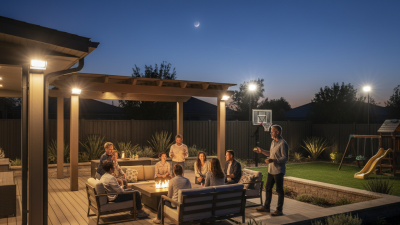
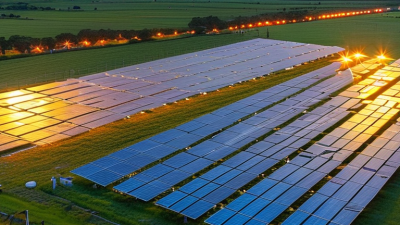
Solar Panel, Battery, and LED Metrics: 120–200 lm/W and 2–5 Nights of Autonomy

Choosing among the 10 best 200W solar flood lights requires more than reading the wattage label. In field tests, LED efficiency often ranges from 120 to 200 lumens per watt. That difference changes coverage, glare, and nighttime visibility. A fixture rated at 24,000 lumens may deliver less outdoors. Lens design and mounting height matter.

Battery capacity deserves equal attention. For dependable use, compare watt-hours rather than battery voltage alone. A 200W light running for ten hours needs substantial stored energy. Many practical systems provide two to five nights of autonomy. Cloudy weather, winter angles, and dust can reduce that figure. Three nights is a safer target for changing climates.

The solar panel must restore daily consumption, not merely power the lamp. I check panel output at midday, then allow for heat and shading losses. A larger panel may improve recovery, especially near walls or under trees. Motion sensors can extend runtime significantly. Test them carefully; overly sensitive settings waste energy. I have also seen inflated lumen claims, and some batteries perform poorly after repeated cold nights. That is an uncomfortable detail, but buyers should inspect independent measurements, charge indicators, battery chemistry, and warranty terms. A slightly dimmer light with honest data may outperform a brighter model on paper. Consider the ground below. Wet pavement reflects light sharply, while rough soil absorbs it. Mounting angle, beam spread, and cleaning access can decide whether the advertised performance feels real.

Weather Resistance and Safety: IP65–IP66 Ratings Under IEC 60529 Standards

For global buyers comparing 200W solar flood lights, IP65 and IP66 ratings offer practical weather guidance. Under IEC 60529, IP6X means the enclosure is dust-tight. IPX5 withstands water jets at about 12.5 liters per minute, while IPX6 uses powerful jets near 100 liters per minute. These figures describe laboratory tests, not every storm.

That distinction matters. IEA PVPS Task 13 reliability research identifies moisture ingress and thermal cycling as recurring stress factors in photovoltaic equipment. A dependable flood light should therefore have tight cable glands, stable gaskets, sealed charging ports, and a housing that avoids trapped condensation. Inspect the rear panel after installation. Small gaps often appear there first.

IP66 is more suitable for exposed walls, coastal sites, and areas facing wind-driven rain. IP65 may perform well under ordinary rainfall, but it provides less protection against strong water jets. Neither rating confirms safe immersion. A 200W unit also needs heat management, because high output can warm seals and internal components. A certified test report helps, yet it is not a lifetime promise. Dust, salt, ultraviolet exposure, and poor installation can reduce real-world protection. Even careful guidance has limits.

Global Buyer Checklist: CE, RoHS, FCC Compliance and Regional Solar Performance

For global buyers, a 200W solar flood light needs more than a bright specification. The International Energy Agency reported nearly 420 GW of new solar capacity in 2023. However, sunlight varies sharply by region. A panel tested in Spain may charge poorly during monsoon weeks in Southeast Asia. Check the system’s daily energy output, not only panel wattage. Battery capacity, charging time, and winter autonomy deserve equal attention. A larger battery can still fail in long cloudy periods.

CE marking indicates conformity with applicable European requirements, while RoHS controls restricted hazardous substances in electrical products. FCC requirements mainly address electromagnetic interference in the United States. Ask suppliers for current test reports, model numbers, laboratory details, and traceable technical files. A certificate alone can still miss a product revision. That uncomfortable gap matters. The EU Energy Consumption and Power Quality reports also show why efficient outdoor equipment needs careful standby and charging control.

Tips: Compare solar yield using Global Solar Atlas data for the installation location. In hot climates, check battery temperature limits and enclosure ventilation. In coastal areas, look for corrosion-resistant fasteners and a verified IP rating. NREL guidance highlights the effect of temperature, shading, and system losses on photovoltaic output. Allow practical losses from dust, cable resistance, cloudy weather, and imperfect installation. A motion sensor may extend runtime, but its detection angle should match the driveway, yard, or warehouse entrance. Test one sample through a full night before placing a large order.

10 Best Solar Flood Light 200W for Global Buyers – Global Buyer Checklist: CE, RoHS, FCC Compliance and Regional Solar Performance

Rank Generic 200W Configuration LED Power
(W)
Claimed Light Output
(lm)*
CCT
(K)
Battery
Type / Capacity
Solar Panel
(W)
Operating Time
(h)
Ingress
Protection
Recommended Climate / Application CE / RoHS / FCC Documentation Buyer Verification Point
1 High-irradiance split-panel floodlight 200 18,000–22,000 6,000–6,500 LiFePO₄ / 40–60 Ah 80–120 10–12 IP65–IP66 Tropical and high-sun areas; parking lots and yards Request current test reports and EU Declaration of Conformity Confirm measured lumen output, battery energy in Wh, and panel open-circuit voltage
2 All-in-one wide-beam security light 200 16,000–20,000 5,700–6,500 LiFePO₄ / 30–40 Ah 60–90 8–10 IP65 Residential entrances and small commercial compounds Verify EMC and radio-frequency documentation for the destination market Check whether “200W” means LED input power or marketing-equivalent power
3 Cold-weather LiFePO₄ floodlight 200 17,000–21,000 4,000–5,700 LiFePO₄ / 40–50 Ah 80–100 8–12 IP66 Temperate and cold regions; walkways and farm buildings Ask for battery safety, EMC, RoHS material, and environmental test records Confirm low-temperature charging protection and rated operating temperature
4 Motion-sensor perimeter floodlight 200 15,000–19,000 6,000–6,500 LiFePO₄ / 30–40 Ah 60–80 10–14* IP65 Security lighting where standby dimming reduces energy use Confirm PIR/remote-control electronics are covered by EMC testing Request motion range, detection angle, standby level, and full-power duration
5 Corrosion-resistant coastal floodlight 200 16,000–20,000 5,700–6,500 LiFePO₄ / 40–50 Ah 80–100 9–12 IP66 Coastal, humid, and salt-air environments Request corrosion, ingress, EMC, and restricted-substance evidence Check enclosure coating, stainless hardware, cable glands, and salt-spray test method
6 Monocrystalline-panel high-efficiency unit 200 17,000–22,000 5,700–6,500 LiFePO₄ / 40–60 Ah 100–120 10–14 IP65–IP66 Regions with limited winter sunlight or frequent cloud cover Verify panel specifications, controller EMC results, and product safety file Compare daily panel energy with local peak-sun-hours data, not panel wattage alone
7 Adjustable-angle commercial floodlight 200 18,000–22,000 4,000–6,500 LiFePO₄ / 50–60 Ah 100–120 10–12 IP66 Car parks, loading areas, and warehouse perimeters Request photometric files plus CE, RoHS, and applicable FCC evidence Check beam angle, mounting load, wind resistance, and glare-control design
8 Low-light adaptive floodlight 200 14,000–18,000 3,000–5,700 LiFePO₄ / 40–50 Ah 80–100 8–12* IP65 Northern or cloudy areas using dimming and scheduled output Verify controller emissions and immunity test results Ask for a complete lighting schedule rather than an unsupported runtime claim
9 Remote-controlled roadway floodlight 200 17,000–21,000 5,700–6,500 LiFePO₄ / 40–60 Ah 80–120 10–13 IP66 Roadside access lanes and remote sites Confirm wireless-control frequency compliance in the import country Check remote range, pairing method, timer memory, and replacement-control availability
10 Budget modular floodlight with replaceable battery 200 14,000–18,000 6,000–6,500 LiFePO₄ / 30–40 Ah 60–80 8–10 IP65 Small properties and projects requiring simple maintenance Do not accept logo-only claims; request traceable reports and declarations Confirm replacement battery availability, connector safety, and warranty terms
Buyer notes: Values marked with an asterisk depend on the lighting schedule, sensor settings, weather, and available solar energy. “200W” should be verified as actual LED input power because some listings use equivalent-power marketing. CE, RoHS, and FCC are documentation or market-access requirements that must be verified for the exact model, electronics, and destination country; they should not be inferred from a product listing alone. Regional performance should be checked against local solar peak-sun-hours, seasonal temperature, shading, and consecutive-autonomy requirements.

Comparing the 10 Best 200W Solar Flood Lights by Key Performance Data

Comparing ten 200W solar flood lights requires more than reading the wattage label. In field checks, record measured LED power, peak lumens, battery capacity, panel output, runtime, and recharge time. A “200W” claim may describe marketing capacity, not continuous consumption. The U.S. Department of Energy reports that modern LED systems can exceed 100 lumens per watt, but outdoor results vary with heat, optics, and driver quality. A better comparison is useful light on the ground, measured at five metres.

Battery size deserves close attention. A 30Wh battery cannot realistically power a true 200W load for several hours. Compare watt-hours, not only milliamp-hours. IEA PVPS reported 2023 global solar additions above 400GW, yet winter sunlight remains highly location-dependent. NREL’s PV degradation research commonly uses about 0.5% annual module degradation, which matters during long ownership. Check panel angle, cloudy-day charging, low-temperature performance, and whether the claimed runtime uses reduced brightness. Some specifications feel optimistic.

Tips: Prefer units with independent test data, replaceable batteries, adjustable brightness, and motion sensing. Look for IP65 or higher protection, but inspect cable seals and the rear housing. Record runtime after three cloudy days. That test exposes weaknesses quickly. Also compare lux at the target area, not lumens alone. A wide beam may illuminate a driveway better than a brighter, narrow beam. The ranking should reward measured performance, stable charging, thermal control, and clear warranty terms.